

The Posterior ALIF
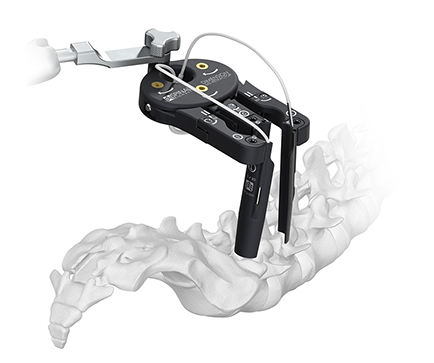
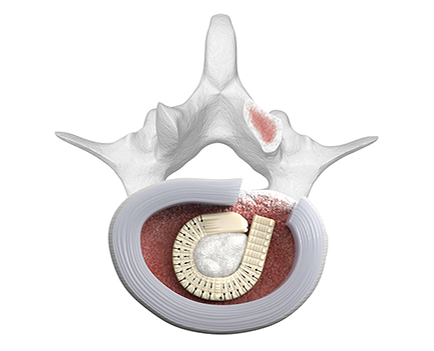
- Minimal access, maximum footprint from a posterior approach
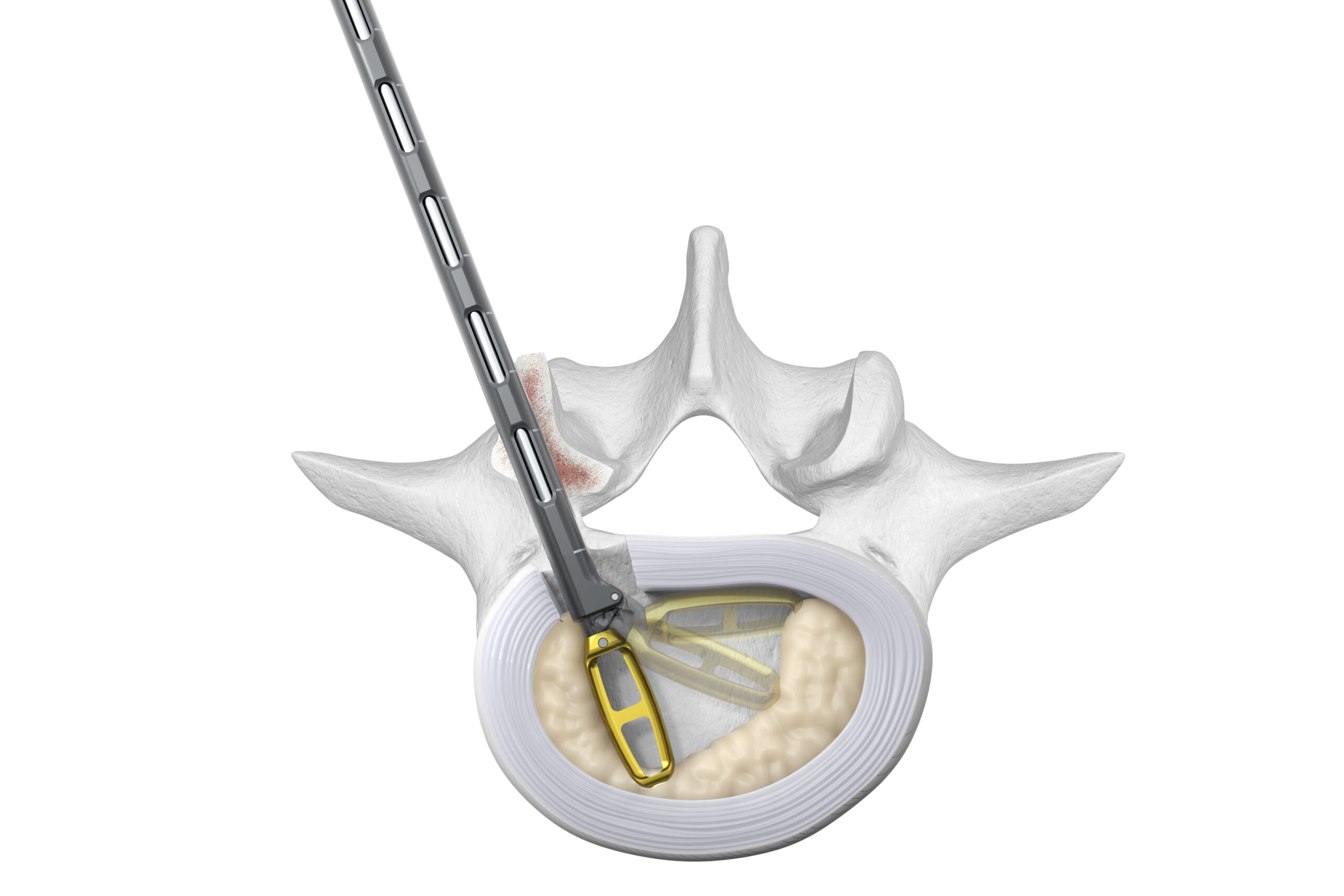
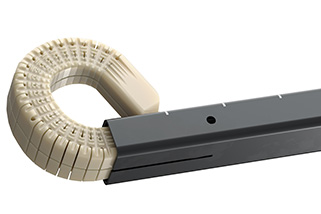
- Multi-dimensional interbody options to restore lordosis1,2
- Clinically-proven to resist long-term subsidence1,2
Procedural Simplicity
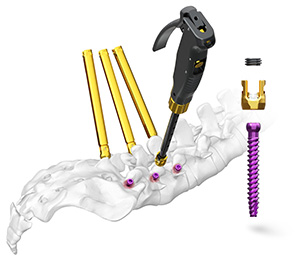
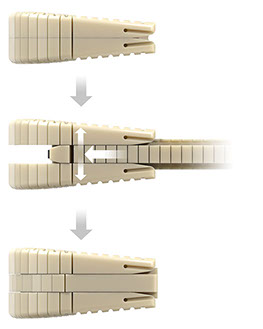
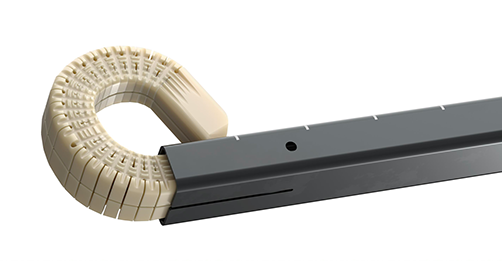
- Inserter delivers Luna XD through 7mm insertion height
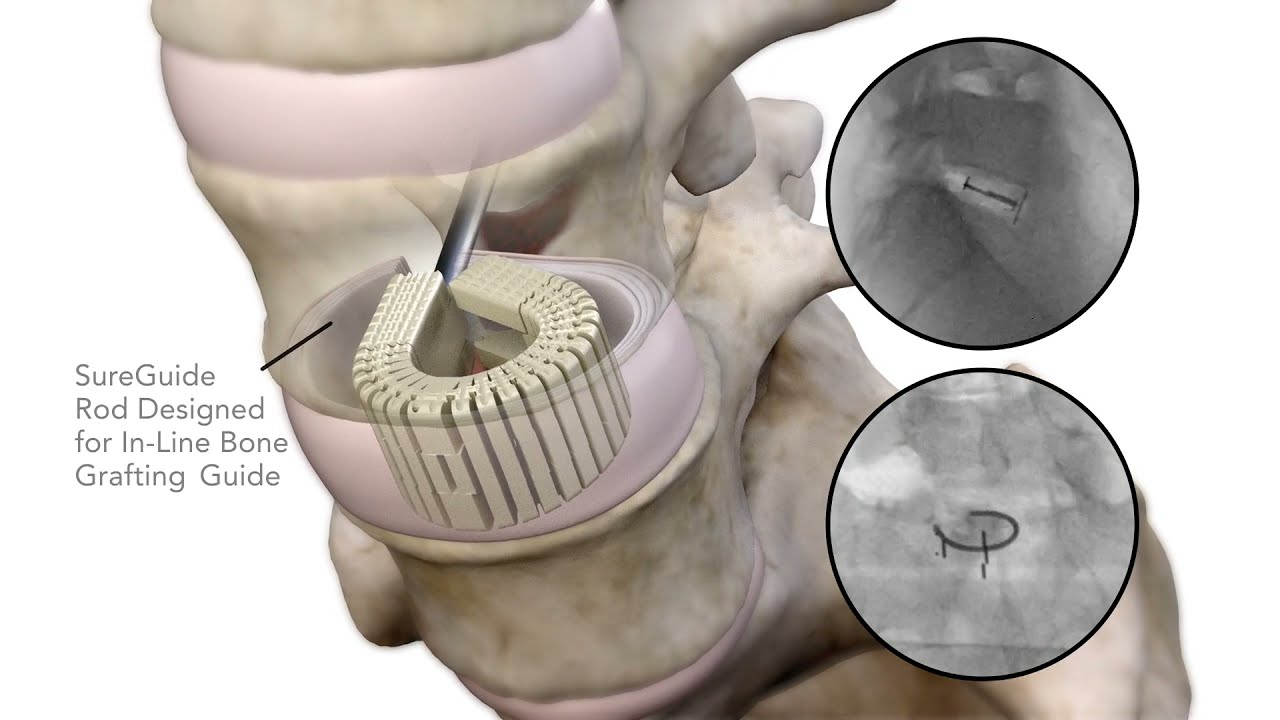
- Easy-to-use, tantalum markers help assist with proper placement
- Post-expansion bone grafting
Proven Clinical Results
- Statistically significant restoration of disc height and neuroforaminal height1
- Biomechanical data shows that segmental motion was equivalent to ALIF cages3
- Fusion rates from two different studies show 93.3% at 1 year and 98% at 2 years1,2
[Clinically validated with 4 peer reviewed publications]
1. Woodward, J., Malone, H., Witiw, C.D., Kolcun, J. P. G., Koro, L., Keegan, K. C.Ahmad, S., Kerolus, M. G., David, B., Fessler, R. D., & Fessler, R. G.(2021). Transforaminal lumbar interbody fusion using a novel minimally invasive expandable interbody cage: patient-reported outcomes and radiographic parameters, Journal of Neurosurgery: Spine (published online ahead of print 2021). Retrieved Jun 21, 2021, from https://doi.org/10.3171/2020.11.SPINE201139
2. Kucharzyk DW, Miller LE. Two-year Clinical and Radiographic Results with a Multidimensional, Expandable Interbody Implant in Minimally Invasive Lumbar Spine Surgery. Cureus. 2020 Feb 21:12 (2):e7070. doi: 10.7759/cureus.7070. PMID: 32226671; PMCID: PMC7089633.
3. Mica MC, Voronov LI, Carandang G, Havey RM, Wojewnik B, Patwardhan AG. Biomechanics of an Expandable Lumbar Interbody Fusion Cage Deployed Through Transforaminal Approach. Int J Spine Surg. 2018 Aug 31;12(4):520-527. doi: 10.14444/5063. PMID: 30276113; PMCID: PMC6159759.